Art & Design




Knowledge Organisers
Art Curriculum
Art Policy
Please click on the picture to view the policy.

Intent
Our Art and Design curriculum aims to inspire children and build their confidence to experiment and create their own works of art. We want pupils to develop their skills, nurture their talents and interests, and express their ideas about the world. Alongside this, they learn about the rich heritage and culture of the British Isles and beyond. Using Kapow as a framework, our subject leader has designed a bespoke curriculum that meets the needs of Oaklands pupils and supports the National Curriculum requirements.
Implementation
The curriculum is organised into three units per year group. These units teach and revisit core art skills in a spiral model, so children build on previous learning with increasing complexity. Lessons are practical and encourage exploration and creativity, using sketchbooks as personal journals to record ideas and progress. Creative and independent outcomes are embedded throughout, helping children make their own artistic choices so that their work is unique and personal.
Each unit runs for six weeks and begins with a ‘cold task’ to show what children can do before learning. After acquiring new skills and knowledge, pupils complete a ‘hot task’ at the end of the unit to demonstrate progress. Knowledge organisers support factual recall and vocabulary development. Teachers assess learning through success criteria and discussion rather than marking sketchbooks, and pupils are actively involved in evaluating their own work and talking about their creative journey. Lessons are fully scaffolded, age-appropriate, and include differentiation so all pupils can access and enjoy learning, with opportunities for challenge where needed.
Impact
By the end of each key stage, children will be able to produce creative work, explore and record ideas, and be proficient in techniques such as drawing, painting, and sculpture. They will learn to evaluate and analyse art using subject-specific language and understand the work of a range of artists and the historical and cultural development of art. Our approach ensures pupils meet the National Curriculum expectations and develop confidence as independent, creative thinkers.


Design Technology
Knowledge Organisers
D&T Curriculum
DT Policy
Please click on the picture to view the policy.
Intent
Our Design and Technology curriculum aims to inspire children to be creative and innovative thinkers who understand the design process from planning to creation and evaluation. We want pupils to develop confidence to take risks, try out ideas, and reflect on their work and the work of others. Through practical projects, children learn how design impacts everyday life and develop skills to become resourceful, enterprising citizens who can contribute to future innovations.
Implementation
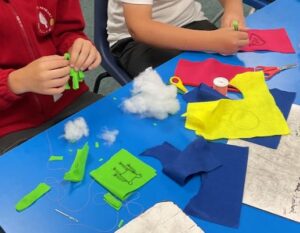
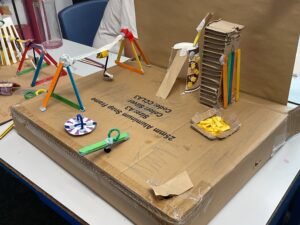
We follow a bespoke curriculum based on Kapow’s framework, ensuring all lessons meet National Curriculum objectives. Each term, pupils complete a six-week block of lessons that cover the key areas of Design and Technology: designing, making, evaluating, using technical knowledge, and understanding cooking and nutrition. Lessons are practical and include opportunities for individual and team projects, encouraging planning, collaboration, and problem-solving.
Teachers use assessment tracking and monitoring to ensure progress and identify areas for improvement. Knowledge and skills are taught in a structured sequence and revisited over time, allowing pupils to build confidence and competence. Cross-curricular links with subjects such as Science, Maths, Engineering, and Art help children see how design connects to the wider world.
Impact
By the end of each key stage, children will be able to design and make high-quality products for a range of purposes, evaluate and improve their work, and apply technical knowledge confidently. They will understand the principles of nutrition and learn basic cooking skills. Our approach equips pupils with creativity, teamwork, and problem-solving skills that will help them thrive both in school and in later life. They will leave Oaklands with a sense of pride in their ideas and the ability to adapt and innovate.